
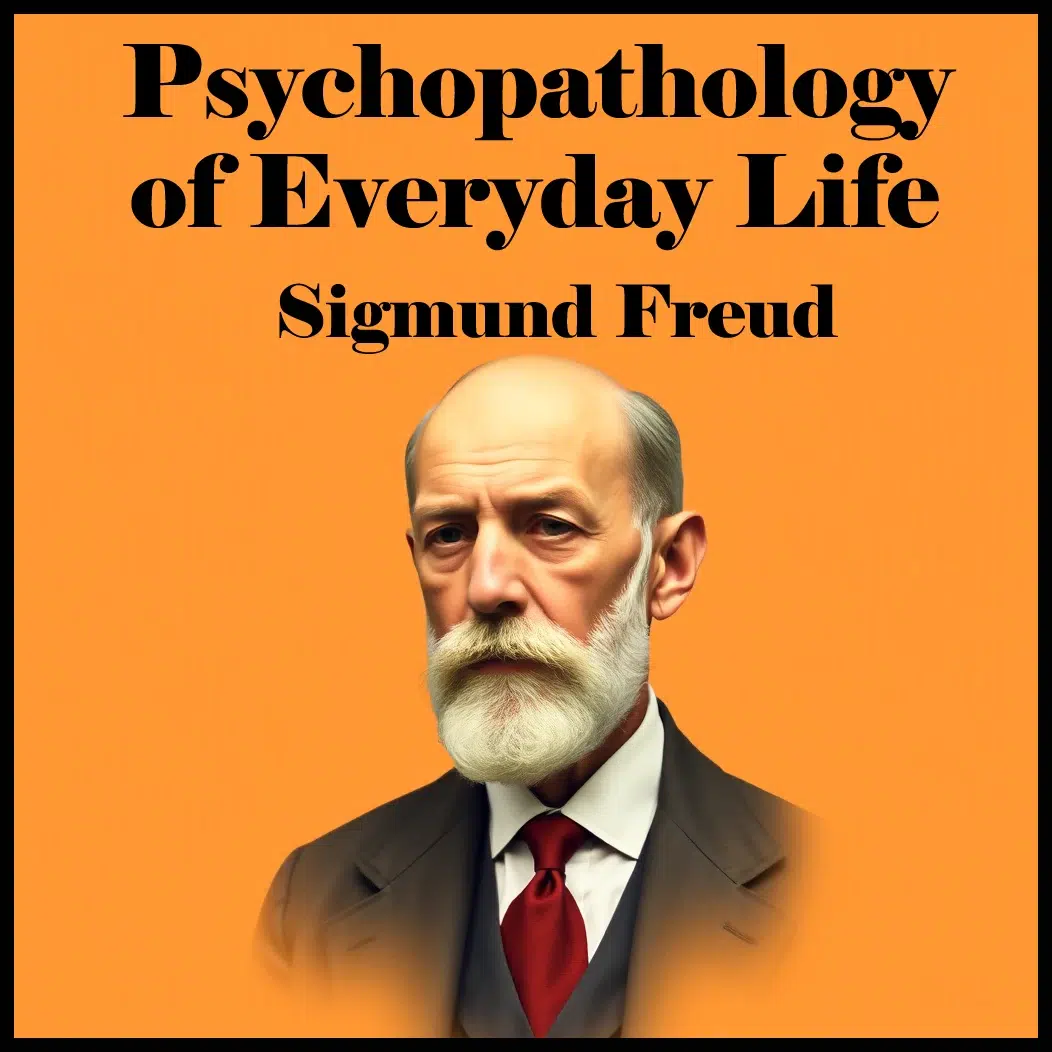
Psychopathology of Everyday Life
Psychopathology of Everyday Life by Sigmund Freud is one of the foundational works of modern psychoanalysis. In this classic study, Freud explores what our everyday slips, mistakes, forgotten names, and small accidents reveal about the hidden life of the unconscious mind. This DreamAudiobooks edition turns a dense but fascinating psychological text into an engaging listening experience, perfect for anyone curious about how the mind really works beneath the surface of ordinary life.
🎧 Listen to Psychopathology of Everyday Life – Full Audiobook
Enjoy this important work of psychology as a free full audiobook on your favorite platform:
- Listen on Spotify
- Listen on Apple Podcasts
- Listen on iHeartRadio
- Listen on Amazon Music / Audible
- Listen on Deezer
📘 About This Audiobook
Originally published in 1901, Psychopathology of Everyday Life is Freud’s exploration of the “small failures” of the mind: mispronunciations, slips of the tongue, losing objects, forgetting appointments, and other everyday errors that most people simply dismiss. For Freud, these minor mistakes are not random. Instead, they are meaningful clues that reveal hidden wishes, conflicts, and fears operating in the unconscious.
The DreamAudiobooks version offers a clear and accessible narration that guides listeners through Freud’s examples and arguments. While the book is more than a century old, its observations still feel strikingly modern. Listening to this audiobook allows you to absorb Freud’s ideas at a comfortable pace, turning a dense text into an engaging intellectual journey.
🧠 What Is “Psychopathology of Everyday Life”?
In this work, Freud proposes that the boundary between mental health and “pathology” is not as sharp as people often believe. Instead of looking only at dramatic symptoms, he focuses on small, everyday events that almost everyone experiences. When we forget the name of someone we know well, say the wrong word at an important moment, misplace a valuable object, or make an embarrassing mistake, Freud argues that these events may be driven by unconscious motives.
He calls these phenomena “parapraxes,” or psychological slips. The book is structured around case studies, anecdotes from Freud’s own life and practice, and detailed analyses of dreams, jokes, and verbal mistakes. Through these examples, he tries to show that the unconscious mind is constantly active, even in the most ordinary situations.
🔍 Key Ideas and Concepts
1. Slips of the Tongue (Freudian Slips)
Perhaps the most famous idea associated with this book is the “Freudian slip.” When a person says one word but clearly intended to say another, Freud suggests that the error may reveal a hidden wish or worry. The mistake is not purely accidental—it is a compromise between what the person wants to say and what they are consciously trying to hide.
2. Forgetting Names and Events
Freud also explores why we sometimes forget names, appointments, or promises at very specific moments. According to his interpretation, forgetfulness can be a subtle form of resistance. When we “cannot remember” something important, it may be because remembering it would create anxiety, guilt, or conflict.
3. Misplacing and Losing Objects
Another recurring topic is the loss or misplacement of personal belongings. Freud argues that when we continually lose or damage a particular object, this pattern may reflect underlying emotional tension. The unconscious may be using clumsiness as a way to express anger, fear of responsibility, or a desire to distance ourselves from something.
4. Everyday Mistakes in Reading and Writing
Freud analyzes slips made while reading aloud, misprints in newspapers, and small errors in written work. These mistakes, he suggests, are not always random—they can reveal conflicting ideas or wishes that break through in distorted form.
5. The Role of the Unconscious
Behind all of these examples is Freud’s central claim: much of our mental life is unconscious. Thoughts and feelings we are not aware of can still influence our speech, behavior, and attention. Psychopathology of Everyday Life is therefore not simply about errors; it is a demonstration of how the unconscious makes itself known.
📌 Everyday Examples You Will Recognize
One of the reasons this book works so well in audio form is that it is built around vivid, concrete examples. As you listen, you will probably recognize many situations from your own life:
- forgetting to post an important letter until it is too late,
- calling someone by the wrong name at a sensitive moment,
- misreading a sentence in a way that accidentally reveals what you feared or hoped it would say,
- losing an object linked to a task you secretly did not want to perform.
These stories make Freud’s theories feel personal and immediate. They invite listeners not only to learn psychoanalytic concepts, but also to reflect on their own patterns of behavior.
⭐ Why This Book Still Matters Today
Although psychology has evolved and many details of Freud’s theories have been revised or challenged, Psychopathology of Everyday Life remains important for several reasons:
- It introduced the idea that small, everyday behaviors can be psychologically meaningful.
- It helped popularize the concept of the unconscious mind beyond academic circles.
- It opened new ways of thinking about memory, error, and self-deception.
- It continues to influence literature, film, therapy, and cultural analysis.
In a world where people are increasingly interested in mental health, self-knowledge, and emotional intelligence, Freud’s reflections on everyday mistakes still offer powerful tools for understanding how we think and feel.
🎧 How Listening to the Audiobook Helps You
Reading Freud on the page can sometimes feel demanding. His examples are detailed, and his reasoning can be dense. Listening to Psychopathology of Everyday Life as an audiobook solves this problem by letting the ideas unfold at a natural pace. You can absorb the stories and analyses while commuting, walking, or relaxing at home.
This DreamAudiobooks edition is especially useful if you:
- are curious about psychoanalysis but new to Freud,
- want to explore how unconscious motives might shape your own everyday life,
- enjoy classic works of psychology and philosophy,
- prefer listening to complex texts rather than reading them on the page.
As you listen, you may start noticing your own “Freudian slips” and small mistakes in a new light—not as random failures, but as meaningful signals from the deeper layers of your mind.
👤 About Sigmund Freud
Sigmund Freud (1856–1939) was an Austrian neurologist and the founder of psychoanalysis. His theories of the unconscious, dreams, repression, and emotional conflict reshaped the way people think about the mind. While many aspects of his work are debated today, his influence on psychology, literature, and culture is undeniable.
Psychopathology of Everyday Life is one of his most accessible books, showing how complex inner processes reveal themselves in ordinary situations. Together with works like The Interpretation of Dreams and Three Essays on the Theory of Sexuality, it forms a key part of his contribution to modern thought.
🔗 Related Audiobooks on DreamAudiobooks
If you enjoyed this exploration of the unconscious mind, you may also like these free full audiobooks on DreamAudiobooks:
- The Metamorphosis – Franz Kafka’s surreal tale of identity, alienation, and transformation.
- Crime and Punishment – a psychological novel about guilt, morality, and inner conflict.
- Walden – Henry David Thoreau’s introspective reflection on solitude, nature, and the examined life.
- The Great Gatsby – a powerful portrait of desire, illusion, and the search for meaning.
- The Sayings of Lao Tzu – timeless wisdom on balance, simplicity, and the inner journey.
Each of these titles, like Psychopathology of Everyday Life, invites you to look beneath the surface of behavior and society to discover the deeper forces shaping human experience.