
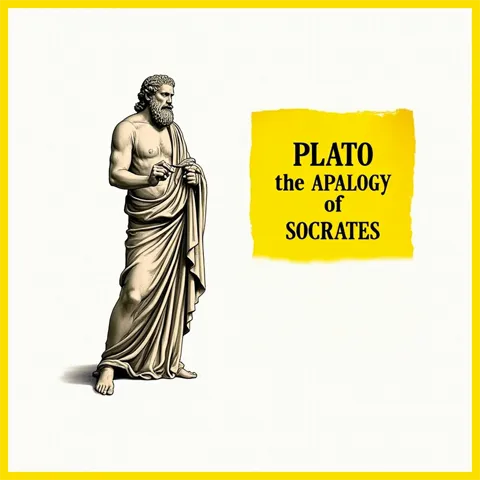
The Apology of Socrates
The Apology of Socrates is one of the most influential works in Western philosophy. Written by Plato, it recounts the speech delivered by Socrates during his trial in 399 BCE, when he was accused of impiety and corrupting the youth of Athens. Far from offering a defense in the modern sense, Socrates uses this moment to explain the purpose of his life, challenge the assumptions of his accusers, and articulate the meaning of wisdom, virtue, and the examined life. This audiobook offers a powerful, immersive way to experience a foundational moment in human thought.
🎧 Listen to “The Apology of Socrates” – Full Audiobook
Experience this timeless philosophical masterpiece on your favorite platform:
📚 About This Audiobook
This audiobook of The Apology of Socrates presents Plato’s classic dialogue in a clear and truly engaging way. Rather than dramatizing the events, the narration preserves the philosophical depth and clarity of Socrates’ arguments. The dialogue remains accessible, even for listeners new to philosophy, while still offering profound insights for advanced students and lifelong learners.
The work is not an “apology” in the modern sense; the Greek word apologia means “a defense” or “an explanation.” Socrates uses his trial to explain his life’s mission, defend the value of questioning, and encourage Athenians to care for their souls above wealth, reputation, or superficial success.
🧠 Story Overview
The Charges
Socrates faces two primary accusations: corrupting the youth of Athens and failing to recognize the official gods of the city. His accuser, Meletus, represents a long-standing distrust of Socrates’ methods, which often exposed contradictions in the arguments of powerful politicians, poets, and craftsmen.
Socrates’ Defense
Rather than begging for mercy, Socrates addresses the jury with honesty and clarity. He explains that he has spent his life questioning others because the Oracle at Delphi declared him “the wisest of men.” Confused by this statement, Socrates began interrogating those reputed to be wise. He discovered that most people believed they knew much more than they actually did.
Thus, Socrates concludes that true wisdom lies in recognizing the limits of one’s knowledge — a revolutionary idea that forms the heart of Western philosophy.
The Verdict and Sentence
Socrates is found guilty. When asked to propose a counter-penalty, he ironically suggests he should be rewarded for benefiting the city. Ultimately, the jury sentences him to death. Socrates accepts the decision calmly, insisting that a philosopher should not fear death but remain committed to truth and virtue.
Final Reflections
In one of the most famous passages in philosophy, Socrates tells the jury that “the unexamined life is not worth living.” He argues that caring for the soul is more important than any material concern, and that no harm can come to a good person in life or after death.
🏛️ Historical and Philosophical Context
Athens After the Peloponnesian War
The dialogue takes place during a turbulent period when Athens was recovering from military defeat, political upheaval, and widespread distrust. Socrates’ relentless questioning made him unpopular among those who valued authority and tradition.
Socrates as a Social Critic
Socrates challenged the status quo and exposed the ignorance of politicians, poets, and craftsmen. While he believed he was helping Athens, many citizens saw him as dangerous.
Plato as Author
Plato uses this dialogue to honor his teacher and preserve his method. Many scholars believe The Apology is one of the closest accounts we have of Socrates’ actual words.
💡 Themes and Key Ideas
The Examined Life
Socrates argues that the purpose of life is moral and intellectual self-improvement. To pursue truth and virtue is to live meaningfully.
Wisdom and Ignorance
Socrates becomes the symbol of intellectual humility — recognizing one’s ignorance is the beginning of wisdom.
Justice and Duty
Socrates insists that one must do what is morally right, even when facing punishment or death. He refuses to compromise his principles for personal safety.
The Soul
The dialogue emphasizes the importance of the soul over the body, urging listeners to prioritize ethical living above wealth, power, or reputation.
Freedom of Speech and Inquiry
Socrates defends the right — and necessity — of questioning accepted beliefs. His trial becomes one of history’s earliest examples of intellectual freedom under threat.
🎧 Why Listen to This Audiobook
This audiobook is ideal for listeners who enjoy profound, timeless ideas that speak directly to the modern world. Through the strength of its narration, the dialogue becomes vivid and accessible.
Reasons to listen include:
- A clear introduction to one of philosophy’s foundational texts
- The opportunity to explore ethics, justice, and virtue
- A powerful narrative about courage and truth
- An engaging way to experience Plato’s writing
- Timeless insights into human behavior and society
👂 Who Is This Audiobook For?
- Students of philosophy or humanities
- Listeners interested in ethics, justice, and moral courage
- Fans of classical literature
- Anyone exploring self-development and critical thinking
- Readers seeking primary texts in Western thought
🔗 More Classics on DreamAudiobooks
- The Art of War
- The Sayings of Lao Tzu
- Daodejing (Tao Te Ching)
- Crime and Punishment
- The Mysterious Stranger
🌟 Final Thoughts
The Apology of Socrates remains a timeless exploration of truth, justice, and moral integrity. This audiobook offers a powerful way to experience one of the greatest philosophical texts ever written. Whether you’re new to classical thought or deepening your understanding, this work challenges you to reflect on how you live, what you value, and what it means to pursue wisdom.