A Midsummer Night’s Dream – Audiobook
A Midsummer Night’s Dream is one of William Shakespeare’s most enchanting comedies, blending romance, magic, and mischief in a single unforgettable tale. Set between the royal court of Athens and a mysterious enchanted forest, the play follows lovers, fairies, and a group of comic actors whose lives intersect in surprising and humorous ways. This audiobook version allows listeners to fully experience the poetic language, fast-paced dialogue, and whimsical atmosphere that make this play a timeless favorite.
Whether you are discovering Shakespeare for the first time or revisiting this classic, listening to A Midsummer Night’s Dream as an audiobook brings the characters and their tangled relationships vividly to life. The rhythm of the verse, the sounds of the forest, and the playful tone of the fairies are all enhanced when the story is heard aloud.
- Introduction to the Play
- Plot Overview
- Key Themes and Ideas
- Main Characters
- Why Listen to the Audiobook Version
- Tips for Enjoying Shakespeare in Audio
- Listen Now on Your Favorite Platform
- More Classic Audiobooks on Dream Audiobooks
🔹 Introduction to the Play
First performed in the late 16th century, A Midsummer Night’s Dream remains one of Shakespeare’s most popular and frequently performed plays. It combines romantic confusion, magical intervention, and theatrical comedy in a compact, entertaining story. The play is set around the wedding of Duke Theseus and Hippolyta, and much of the action takes place during a single “midsummer night” filled with dreams, illusions, and transformations.
The story moves between three worlds: the noble court of Athens, the enchanted forest ruled by fairies, and the group of craftsmen who rehearse a play within the play. This layered structure gives the story a rich, multidimensional feel, making it perfect for an immersive audiobook experience.
🔹 Plot Overview
The central plot follows two young couples: Hermia and Lysander, who are in love but forbidden to marry, and Demetrius and Helena, whose affection is complicated and unbalanced. Hermia’s father insists she marry Demetrius, but she runs away into the forest with Lysander. Helena, still in love with Demetrius, follows them, and Demetrius pursues Hermia. All four lovers become lost in the woods, where the fairy king Oberon and his mischievous servant Puck decide to intervene.
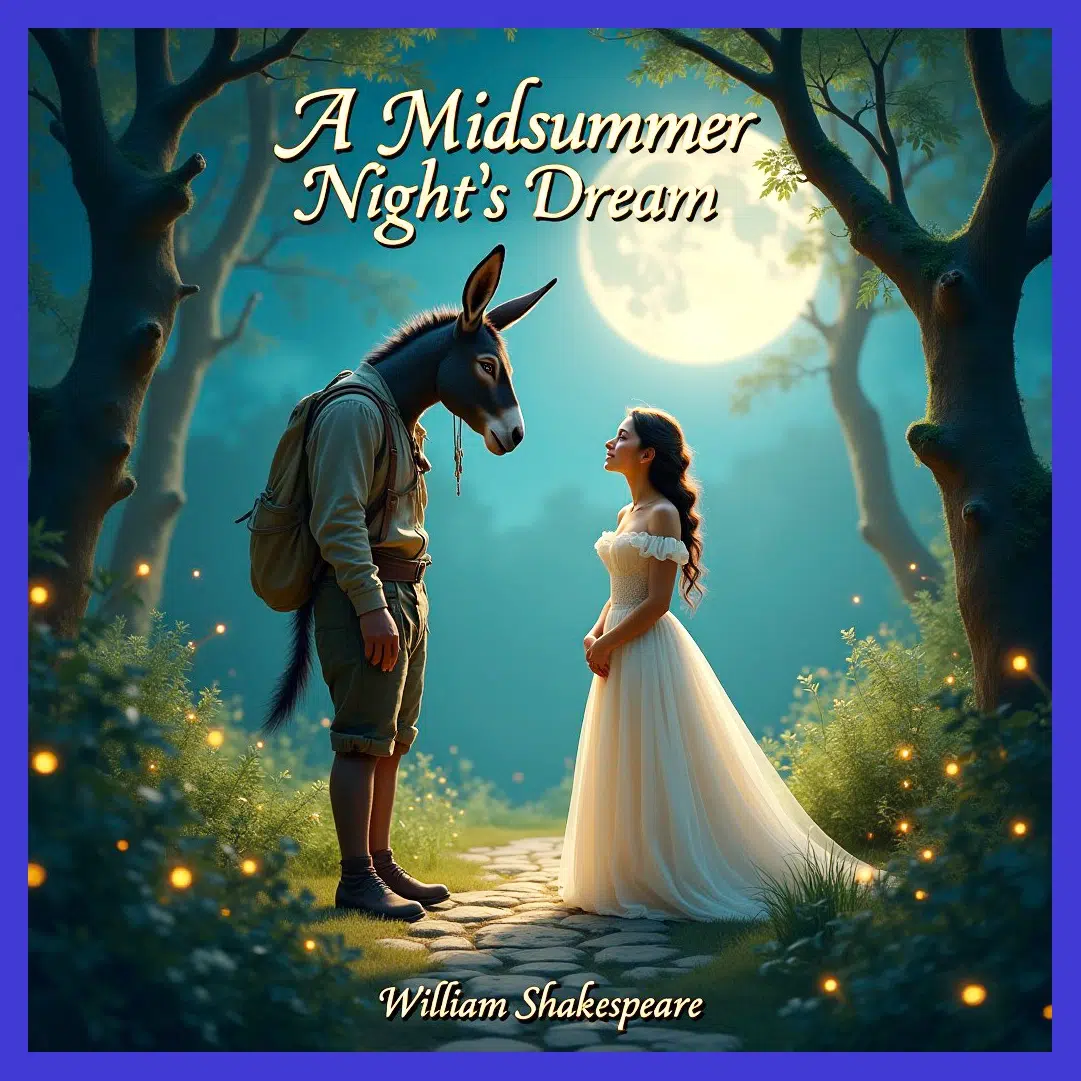
Using a magical flower that causes people to fall in love with the first person they see upon waking, Puck accidentally creates chaos. Lysander and Demetrius both fall in love with Helena, leaving Hermia confused and heartbroken. At the same time, a group of local craftsmen—often called the “mechanicals”—enter the forest to rehearse a play they hope to perform for the Duke. Puck transforms one of them, Bottom the Weaver, by giving him the head of a donkey. Under the influence of magic, the fairy queen Titania falls in love with the transformed Bottom, adding another layer of comedy.
Eventually, Oberon instructs Puck to correct the mistakes. The spell is lifted from Titania and Bottom, and the love potion is adjusted so that the lovers are paired correctly: Hermia with Lysander and Helena with Demetrius. The play ends back in Athens with multiple weddings and the performance of the comic play within the play. Puck closes the story by addressing the audience directly, suggesting that everything may have been nothing more than a dream.
🔹 Key Themes and Ideas
Love and its Irrational Nature: One of the central themes in A Midsummer Night’s Dream is the unpredictable, irrational, and sometimes painful nature of love. Characters fall in and out of love quickly, especially under the influence of magic, highlighting how fragile and changeable human emotions can be.
Reality vs. Illusion: The play constantly blurs the line between what is real and what is imagined. The forest is a place of dreams and illusions, where characters question their experiences. When they finally awaken, they wonder whether the night’s events really happened. This tension between reality and fantasy makes the story especially powerful in audiobook form, as listeners are invited to imagine the scenes in their own minds.
Transformation and Identity: Characters in the play undergo both physical and emotional transformations. Bottom’s transformation into a donkey and the changing affections of the lovers symbolize the fluid nature of identity and desire. These transformations remind listeners that people are often different from how they seem on the surface.
🔹 Main Characters
Theseus and Hippolyta: The Duke of Athens and his bride-to-be provide the frame for the story. Their upcoming wedding sets the time of celebration and festivity.
Hermia, Lysander, Helena, and Demetrius: These four young lovers represent different aspects of romantic desire—loyalty, jealousy, confusion, and hope. Their chase through the forest creates much of the drama and comedy.
Oberon and Titania: The fairy king and queen are powerful supernatural beings whose arguments affect both the human and fairy worlds. Their conflict and reconciliation mirror the tensions of the human couples.
Puck (Robin Goodfellow): The most memorable character for many listeners, Puck is a playful, mischievous fairy whose mistakes and tricks drive the plot forward. As a narrator-like figure, Puck connects the audience to the magical world of the play.
Bottom and the Mechanicals: The comic actors rehearsing their play provide humor and self-parody. Bottom’s transformation and his exaggerated self-confidence create some of the most entertaining scenes in the story.
🔹 Why Listen to the Audiobook Version
Shakespeare’s plays were written to be performed and heard, not only read on the page. Listening to A Midsummer Night’s Dream as an audiobook restores the original experience of spoken drama. The rhythm of iambic pentameter, the musical quality of the language, and the rapid exchanges of dialogue all become clearer when performed aloud.
An audiobook makes the story more accessible, especially for listeners who find Shakespeare’s language challenging. Intonation, pacing, and character voices help explain the emotions and intentions behind the words. The comedy becomes livelier, the romance more touching, and the magic more immersive when guided by expressive narration.
🔹 Tips for Enjoying Shakespeare in Audio
For listeners who are new to Shakespeare, a few simple strategies can make the experience even more rewarding:
- Read a short summary first: Having a basic understanding of the plot helps you follow the action more easily.
- Listen in a quiet environment: Shakespeare’s language is rich and layered, so a calm setting helps you catch the details.
- Pause and replay: Do not hesitate to rewind certain scenes. Re-listening reveals new meanings and jokes you might have missed the first time.
- Focus on the emotions: Even if some words are unfamiliar, the tone and emotion of each scene will guide your understanding.
🎧 Listen Now on Your Favorite Platform
Enjoy A Midsummer Night’s Dream as a relaxing and magical audio experience wherever you are:
🔗 More Classic Audiobooks on Dream Audiobooks
If you enjoyed the magical atmosphere and timeless storytelling of A Midsummer Night’s Dream, you may also like these classic audiobooks available on Dream Audiobooks: