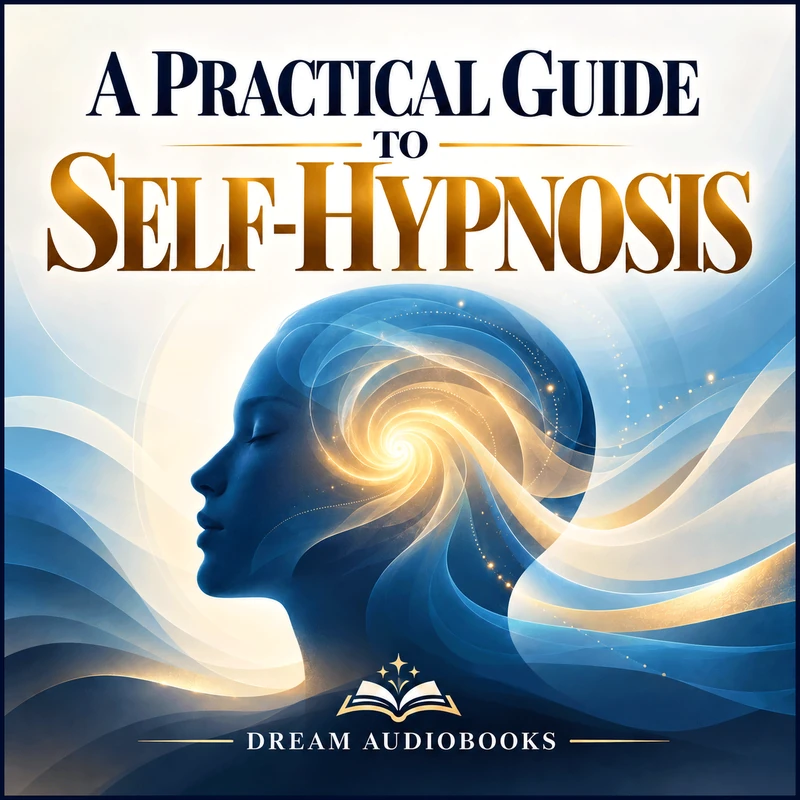
A Practical Guide to Self-Hypnosis Audiobook – Melvin Powers
Listen to A Practical Guide to Self-Hypnosis by Melvin Powers, a classic introduction to self-hypnosis, suggestion, concentration, relaxation, and the practical use of focused mental attention for personal development.
Listen Now – A Practical Guide to Self-Hypnosis Audiobook
Choose your preferred listening platform below to start A Practical Guide to Self-Hypnosis audiobook.
Whether you prefer listening during a quiet evening, a daily walk, or a dedicated period of study, this audiobook offers a structured introduction to Melvin Powers’ approach to understanding and practicing self-hypnosis.
About A Practical Guide to Self-Hypnosis
A Practical Guide to Self-Hypnosis by Melvin Powers is a straightforward introduction to hypnosis written for ordinary readers rather than specialists. Powers attempts to remove some of the mystery surrounding hypnosis and explain it as a process involving concentration, suggestion, expectation, imagination, and repeated practice.
Instead of presenting hypnosis as a strange power exercised by one person over another, the book places much of the emphasis on the participant. Powers argues that successful hypnosis depends heavily on cooperation and willingness. From this perspective, self-hypnosis becomes an extension of the same basic process: the individual intentionally creates the mental conditions in which focused suggestions can be used.
The book moves gradually from basic explanations to practical exercises. Powers discusses what hypnosis is, common concerns surrounding it, methods for entering a hypnotic state, ways of deepening concentration, techniques for returning to ordinary awareness, and possible applications of self-suggestion.
For modern listeners, the value of the audiobook is not simply in accepting every historical claim about hypnosis. It also provides an interesting look at how self-hypnosis was explained to the general public during the twentieth century and how ideas about attention, expectation, mental rehearsal, habit, and suggestion were connected to personal improvement.
A Practical Guide to Self-Hypnosis Audiobook Summary
The central purpose of A Practical Guide to Self-Hypnosis is to teach listeners how to understand and experiment with self-hypnosis through a gradual, systematic process.
Powers begins by addressing misconceptions. Hypnosis is often portrayed in popular entertainment as a state in which an individual completely loses control and obeys another person’s commands. The book challenges this dramatic image. Instead, Powers describes hypnosis as a condition associated with heightened responsiveness to suggestion and concentrated attention.
This distinction is essential to the rest of the book because it changes the role of the hypnotized person. Rather than being a passive victim of another person’s power, the participant becomes actively involved in creating the experience.
From there, the book turns toward self-hypnosis. Powers explains that a person may learn to use relaxation, concentration, expectation, imagery, and repeated suggestions without depending on a hypnotist. The process is presented as a skill that can improve through repetition rather than as something that must happen perfectly on the first attempt.
The listener is encouraged to approach the practice patiently. Difficulty entering a deeply relaxed or highly focused condition does not necessarily mean that self-hypnosis is impossible. Powers repeatedly emphasizes preparation, motivation, and continued practice.
Another major theme is the wording of suggestions. A vague intention such as wanting to “be better” provides little direction. A more clearly defined suggestion gives the mind a specific objective. Powers therefore encourages deliberate thinking about the behavior, attitude, or habit a person wants to influence.
Later sections explore different methods for increasing depth and concentration. The terminology reflects the period in which the book was written, but the general progression is clear: first learn to relax and focus, then become familiar with the mental state, and finally introduce carefully chosen suggestions.
The final part of the book examines practical uses of self-hypnosis. These include personal habits, confidence, concentration, relaxation, motivation, and other areas of self-development.
The overall message is one of active participation. Powers does not present self-hypnosis as something that simply happens to a person. He presents it as a practice requiring attention, repetition, motivation, and a willingness to work with one’s own patterns of thought.
What Is Self-Hypnosis?
Within the framework of the book, self-hypnosis is a method of deliberately entering a state of concentrated attention and increased responsiveness to suggestion.
One of Powers’ most important arguments is that hypnosis should not automatically be equated with unconsciousness or sleep. A person practicing self-hypnosis may remain aware of what is happening while directing attention away from normal distractions.
This is one reason the book places so much emphasis on concentration. Everyday life constantly divides our attention among conversations, devices, responsibilities, memories, worries, and plans. Self-hypnosis attempts to temporarily narrow that field of attention.
Once attention becomes focused, a person introduces suggestions connected to a chosen objective. These suggestions may involve relaxation, confidence, concentration, motivation, or changing a particular pattern of behavior.
Powers also distinguishes between hypnosis conducted by another person and self-hypnosis. The methods may look different, but he considers the participant’s own cooperation fundamental in both situations.
Key Ideas in A Practical Guide to Self-Hypnosis
1. Suggestion Influences Everyday Life
Powers begins from the observation that human beings are constantly influenced by suggestions. Advertising, social expectations, authority figures, repetition, habits, personal beliefs, and the opinions of other people can all affect how we think and behave.
Self-hypnosis attempts to make that process more intentional. Instead of allowing every external suggestion to compete for attention, an individual deliberately chooses what to focus on.
2. Hypnosis Requires Participation
A central theme of the book is that hypnosis depends on the cooperation of the participant. This directly challenges the popular image of a hypnotist possessing unlimited control over another person.
In self-hypnosis, that principle becomes even clearer because the person is both the subject and the one directing the exercise.
3. Expectations Matter
Powers repeatedly discusses the importance of attitude and expectation. Someone who constantly checks whether hypnosis is “working” may actually make concentration more difficult.
The book therefore recommends approaching the process patiently rather than forcing a dramatic experience.
4. Repetition Builds Familiarity
Self-hypnosis is presented as a skill. A first attempt may feel unfamiliar or unsuccessful. Repeated practice can make relaxation, concentration, and mental imagery easier.
This principle resembles many other forms of training. Reading about a technique provides understanding, but repeated practice develops familiarity.
5. Suggestions Should Have a Purpose
Powers does not encourage entering self-hypnosis without knowing what you want from the session. The listener should first identify a specific objective.
This emphasis on clarity is one reason the book remains interesting to readers of classic personal-development literature. Whether or not a listener uses hypnosis itself, defining a specific objective is usually more useful than relying on a vague wish for improvement.
What You Will Discover in the Audiobook
The book follows a progressive structure rather than immediately presenting advanced exercises. Early sections establish basic concepts before the practical methods become more detailed.
Understanding Self-Hypnosis
The opening material introduces the concept of hypnosis and explains the relationship between ordinary hypnosis and self-hypnosis. Powers discusses suggestibility and the role played by the subject’s willingness and expectations.
Questions About the Dangers of Hypnosis
The book addresses concerns that commonly surround hypnosis. This section is particularly useful for understanding the historical misconceptions Powers wanted to challenge.
Is Hypnosis the Answer?
Rather than treating hypnosis as a universal solution, Powers considers where it might be useful and why expectations should remain realistic.
How Self-Hypnosis Works
The discussion then moves toward the mechanisms Powers believed were involved in hypnosis, especially suggestion and concentrated mental attention.
Entering and Leaving the State
Practical instructions explain how a person might enter a self-hypnotic condition and how to return to normal alertness afterward. Establishing a deliberate ending to a session is part of the structured approach presented in the book.
Deepening Concentration
Later exercises focus on maintaining attention and creating a deeper subjective sense of relaxation or absorption.
Becoming a Better Subject
Powers discusses why people respond differently to hypnosis and suggests ways a person can become more comfortable with the process through practice.
Psychological Aids
The audiobook also examines techniques and mental aids that may help with concentration, imagery, or suggestion.
Practical Applications
The concluding material brings the earlier concepts together and explores how self-hypnosis might be applied to selected personal goals.
The Role of Suggestion in Self-Hypnosis
Suggestion is at the center of Powers’ approach. However, a suggestion is more than simply repeating a sentence and expecting immediate change.
The book encourages listeners to think carefully about what they want to accomplish. A constructive suggestion should have a clear purpose and should not contradict the goal of the session.
For example, someone interested in concentration would focus on attention and task completion rather than repeatedly thinking about distraction. Someone interested in confidence would direct attention toward calm, deliberate behavior rather than continually rehearsing fears.
This illustrates a broader principle found throughout the book: attention tends to follow what is repeatedly emphasized.
Modern listeners should distinguish this principle from exaggerated promises sometimes associated with hypnosis. Listening to or repeating suggestions cannot guarantee every desired outcome. Self-hypnosis is better understood as one possible technique for focused mental practice rather than a substitute for effort, learning, professional care, or realistic action.
Learning Self-Hypnosis Through Practice
One of the strongest practical messages in A Practical Guide to Self-Hypnosis is that progress should not be judged from a single attempt.
A beginner may expect hypnosis to feel dramatic: complete loss of awareness, unusual sensations, or an immediate transformation. Powers repeatedly moves away from this expectation. The experience can be quieter and more gradual.
A practice session may simply involve sitting comfortably, reducing distractions, focusing attention, relaxing the body, following a mental sequence, and repeating a predetermined suggestion.
With repetition, the sequence can become familiar. The listener no longer needs to wonder what comes next, and this familiarity itself can support concentration.
This practical approach connects the audiobook naturally with broader subjects such as discipline, attention, and personal development. If these themes interest you, explore our guide to the
best audiobooks for self-improvement.
Practical Applications Discussed in the Book
Powers connects self-hypnosis with several areas of personal development. The emphasis is generally on using focused suggestions to reinforce a desired response or behavior.
Relaxation
Many self-hypnosis methods begin with physical and mental relaxation. Reducing unnecessary tension can also make it easier to direct attention toward a single idea or exercise.
Concentration
The deliberate narrowing of attention is central to the practice. For that reason, listeners interested in productivity and concentration may find connections between this book and other classics dealing with focus and disciplined thinking.
You can continue exploring this subject in our guide to the
best audiobooks for productivity.
Confidence
Powers discusses the use of suggestion for changing habitual patterns of self-talk and reinforcing more constructive expectations.
Listeners interested particularly in this area can also explore our selection of
best audiobooks for confidence.
Habits
Repeated behavior often becomes automatic. Powers suggests that self-hypnosis may be used as part of an intentional effort to alter certain habits by repeatedly focusing on a preferred response.
Motivation and Personal Goals
Self-hypnosis can also be viewed as a structured period in which a person temporarily removes distractions and concentrates on a specific objective.
For listeners interested in strengthening consistency and self-control, our
best audiobooks for discipline
guide offers additional classic listening recommendations.
How Should Modern Listeners Approach This Book?
A Practical Guide to Self-Hypnosis is a historical self-help and psychology text, and that context matters.
Some terminology, explanations, and claims reflect the period in which Melvin Powers wrote. Psychology, neuroscience, medicine, and clinical hypnotherapy have continued to develop since then.
The audiobook is therefore best approached as both a practical historical guide and an introduction to the author’s perspective on hypnosis.
Listeners can still find useful ideas in the book: reducing distractions, identifying clear goals, practicing concentration, observing habitual thought patterns, using mental rehearsal, and understanding the influence of suggestion.
At the same time, self-hypnosis should not be treated as a replacement for qualified medical or mental-health care. Anyone dealing with a significant medical or psychological condition should seek appropriate professional guidance rather than relying solely on a historical self-help text.
The techniques should also be practiced only when it is safe to relax and reduce attention to the surrounding environment. Do not practice hypnosis exercises while driving, operating machinery, or performing any activity that requires continuous alertness.
Why Listen to A Practical Guide to Self-Hypnosis?
Audio is particularly well suited to a book about concentration and mental exercises. Listening can allow you to absorb the explanations without constantly moving between a text and the exercise being described.
The format also makes it easy to revisit difficult sections. Self-hypnosis is not a subject that necessarily needs to be consumed once from beginning to end and then forgotten. Returning to individual chapters can help clarify the sequence of ideas.
Some listeners may first hear the complete audiobook to understand Powers’ system. On a second pass, they may focus on the sections about attaining self-hypnosis, deepening concentration, suggestion, or practical applications.
Audiobooks also provide a convenient way to explore classic psychology and personal-development literature while walking, relaxing, or performing simple daily tasks.
Who Should Listen to This Audiobook?
A Practical Guide to Self-Hypnosis audiobook may appeal to listeners who are curious about hypnosis but want an accessible introduction rather than a highly technical academic text.
It may also interest people exploring classic self-help literature, personal development, concentration techniques, suggestion, habit formation, relaxation, or the historical development of popular psychology.
Students of psychology and cultural history may find another reason to listen: the book provides an example of how hypnosis was explained to a general audience during the twentieth century.
The audiobook can also complement other works focused on self-mastery. For a very different approach to disciplined thought and deliberate action, listen to
The Art of War by Sun Tzu audiobook.
Sun Tzu approaches mental discipline through strategy, preparation, timing, and awareness rather than hypnosis, making the two books an interesting contrast.
Why This Classic Still Attracts Listeners
The enduring appeal of A Practical Guide to Self-Hypnosis comes partly from the enduring fascination with the relationship between conscious intention and automatic behavior.
People continue to ask many of the same questions Powers addressed: Why are some habits difficult to change? How does expectation influence behavior? Can attention be deliberately trained? Why does repetition affect belief and action? How much influence do suggestions have on our decisions?
Modern research may approach these questions differently, but the questions themselves remain important.
The audiobook also belongs to a long tradition of books that encourage readers to become more deliberate about their own mental habits. Instead of assuming that every thought, reaction, or routine must remain unchanged, Powers encourages experimentation, observation, and practice.
That message connects naturally with other classics of self-development. The methods differ, but many influential books return to similar themes: attention, discipline, repetition, preparation, self-knowledge, and purposeful action.
How to Get More From the Audiobook
For the best experience, consider listening to the audiobook in two different ways.
On your first listen, follow the complete book without worrying about practicing every technique immediately. Focus on understanding Powers’ vocabulary, his definition of hypnosis, and the progression of his method.
On a later listen, return to the practical sections that interest you most. This could include relaxation, attaining self-hypnosis, deepening concentration, psychological aids, or practical applications.
Keeping brief notes may also help. Write down the objective of a technique, the steps involved, and any questions that arise. This turns passive listening into active study.
Most importantly, avoid expecting instant transformation. Whether you are learning meditation, concentration, a physical skill, a language, or the techniques described in this audiobook, repetition and realistic expectations are usually more productive than searching for dramatic immediate results.
Final Thoughts
A Practical Guide to Self-Hypnosis by Melvin Powers remains an accessible introduction to a subject that continues to fascinate readers and listeners.
Its central idea is simple: hypnosis is not presented as supernatural control but as a process involving attention, suggestion, expectation, and participation. Powers then develops that idea into a practical system intended to help readers experiment with self-hypnosis for selected personal goals.
The book’s historical context should always be remembered, and its techniques should not be treated as substitutes for evidence-based professional care when medical or psychological treatment is needed.
Nevertheless, listeners interested in the history of hypnosis, self-help, concentration, personal development, and the psychology of suggestion will find plenty to consider.
Start listening today using Apple Podcasts, Spotify, Amazon Music, or Castbox, and explore the complete audiobook at your own pace.
Choose your listening platform:
Apple Podcasts,
Spotify,
Amazon Music,
or
Castbox.
Frequently Asked Questions
What is A Practical Guide to Self-Hypnosis about?
The book explains Melvin Powers’ approach to hypnosis and self-hypnosis, including suggestion, concentration, relaxation, entering and leaving a hypnotic state, deepening the experience, and applying self-hypnosis to selected personal-development goals.
Who wrote A Practical Guide to Self-Hypnosis?
The book was written by Melvin Powers, an American author and publisher known for practical works related to hypnosis and self-improvement.
Is A Practical Guide to Self-Hypnosis suitable for beginners?
Yes. The book was specifically written in an accessible style and progresses from introductory explanations toward more detailed techniques.
Is self-hypnosis the same as losing consciousness?
No. Powers describes hypnosis primarily in terms of focused attention and responsiveness to suggestion rather than complete unconsciousness. Experiences can vary considerably between individuals.
Can self-hypnosis replace medical or psychological treatment?
No. A historical self-help audiobook should not replace professional diagnosis or treatment. If you have a medical or psychological condition, consult an appropriately qualified healthcare professional.
When should I practice self-hypnosis?
Only practice when you can safely relax without needing to monitor your environment continuously. Never attempt hypnosis exercises while driving, operating machinery, or performing another activity requiring sustained attention.
Where can I listen to A Practical Guide to Self-Hypnosis audiobook?
You can listen through the links on this page using Apple Podcasts, Spotify, Amazon Music, or Castbox.
What other audiobooks are similar?
If you are interested in self-development, discipline, focus, and mental training, explore Dream Audiobooks’ guides to
self-improvement audiobooks,
productivity audiobooks,
and
discipline audiobooks.