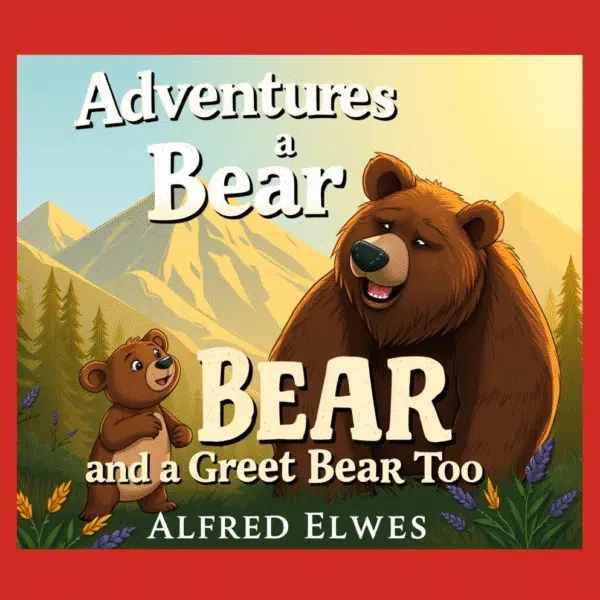
The Adventures of a Bear Audiobook – Listen Free
Listen free above or choose your preferred platform:
Listen to The Adventures of a Bear, and a Great Bear Too by Alfred Elwes free online. Start the complete eight-chapter audiobook with the player above, or choose your preferred listening platform.
This unusual Victorian animal story follows Bruin through home life, travel, prosperity, mistakes, reverses, and their consequences. The audiobook combines animal adventure, social satire, dark humor, and nineteenth-century moral storytelling.
Alfred Elwes does more than place a talking bear in a humanlike world. Through Bruin’s changing fortunes, he explores pride, temper, ambition, social status, responsibility, and the difficulty of improving one’s character.
The result is a historical animal tale that can interest older children, adult listeners, and anyone curious about how Victorian writers used animals to reflect human behavior.
The Adventures of a Bear Audiobook Details
- Full title: The Adventures of a Bear, and a Great Bear Too
- Author: Alfred Elwes
- First published: 1853
- Language: English
- Format: Free unabridged audiobook
- Number of chapters: 8
- Approximate duration: 2 hours and 8 minutes
- Genres: Animal fiction, Victorian literature, children’s classic and social satire
- Main character: Bruin the bear
This is a relatively short audiobook, making it suitable for listeners who want to complete a classic in one afternoon or divide it into several brief listening sessions. Most chapters last between approximately twelve and twenty-one minutes.
The Spreaker player at the beginning of this page contains the complete chapter playlist. You can start with the opening episode, move between chapters, pause your listening, and return to the story later.
About The Adventures of a Bear, and a Great Bear Too
The Adventures of a Bear, and a Great Bear Too is a nineteenth-century animal narrative by British author Alfred Elwes. Its central character is Bruin, a bear whose experiences are presented through a society of animals behaving much like people.
The subtitle should not be interpreted as the introduction of a separate wise Great Bear who guides two younger bears. The story primarily follows Bruin. The expression “a Great Bear Too” describes the importance and scale of its principal bear rather than establishing a second mentor character.
Elwes uses Bruin’s adventures to examine recognizably human weaknesses. Bruin can be impulsive, proud, quick-tempered, ambitious, and easily influenced by changing circumstances.
His position improves and deteriorates as he travels through different stages of life. Each change exposes another aspect of his character.
The book belongs to a tradition in which animal characters make human conduct easier to observe. Instead of delivering every lesson directly, Elwes places his bear in situations involving reputation, work, conflict, money, social standing, punishment, and survival.
The animal setting creates humor, but it also allows the narrative to become surprisingly sharp. Bruin’s experiences are entertaining on the surface, yet they continually point toward questions about judgment, responsibility, and the consequences of uncontrolled behavior.
Listeners searching for an entirely gentle woodland story should therefore expect something different. This is a historical animal satire containing moral consequences and some darker events.
Its value lies partly in that contrast: a bear-centered adventure that can entertain while criticizing poor judgment and uncontrolled behavior.
What Is The Adventures of a Bear About?
The narrative begins with Bruin at home and follows him as his world gradually expands. Travel exposes him to new environments and opportunities, but it also gives his weaknesses more room to develop.
Town life brings contact with a larger animal society governed by status, work, personal connections, and public reputation. Bruin must find his place within this society while dealing with the results of his own personality and decisions.
At different moments, Bruin appears to move toward success. Prosperity offers him security and importance, yet success alone does not transform his character. His temper and decisions continue to matter.
When reverses arrive, the story examines whether he can adapt or whether his established habits will pull him further downward.
The eight chapter titles form a clear progression: home, travel, town life, prosperity, reverses, progress, decline, and rest. This structure turns Bruin’s life into a complete moral journey rather than a disconnected collection of animal episodes.
A Bear in a Humanlike Society
Although the characters are animals, their concerns are recognizably social. They seek respect, make alliances, pursue advantages, argue, work, and respond to changes in fortune.
Caneville and the other settings function as distorted reflections of human society. The animals reproduce many human habits, ambitions, prejudices, and weaknesses.
Animal characteristics add another layer to the satire. A bear’s physical power, a fox’s cunning, or another creature’s habits can become a visible representation of personality.
The animals are therefore not simply decorative replacements for people. Their species help communicate the qualities Elwes wants the reader or listener to notice.
Success Does Not Automatically Create Wisdom
One of the most important ideas in the story is that improved circumstances do not necessarily produce improved conduct. Bruin’s fortunes can rise while his weaknesses remain.
The narrative repeatedly connects external events to inner character. This makes the audiobook more than a story about whether a bear succeeds.
It asks what success means when it is not supported by judgment, restraint, or responsibility. Bruin’s reverses are therefore not arbitrary obstacles. They are connected to choices, temperament, and the way he responds to other characters.
A Complete Rise-and-Fall Narrative
The story’s compact structure gives it the shape of a biography. Listeners meet Bruin at home, accompany him into a wider world, observe his period of prosperity, and follow the consequences that come afterward.
This progression creates momentum despite the book’s episodic style. Each chapter changes Bruin’s circumstances and moves him toward the conclusion. The final section provides closure to the path established in the opening chapter.
Complete Chapter Guide
The audiobook is divided into eight episodes. The descriptions below explain the role of each chapter without revealing every event.
- Chapter 1: At Home — approximately 14 minutes
The opening chapter introduces Bruin, his early surroundings, and the aspects of his disposition that will influence later events. It establishes the animal world and the moral tone of the narrative. - Chapter 2: Upon His Travels — approximately 14 minutes
Bruin leaves familiar surroundings and begins encountering the wider world. Travel offers independence and opportunity, but it also exposes the consequences of acting without sufficient restraint. - Chapter 3: Town Life — approximately 20 minutes
Bruin enters a busier social environment. Town life introduces new relationships, ambitions, risks, and expectations. The animal society becomes an increasingly recognizable satire of human behavior. - Chapter 4: Prosperity — approximately 17 minutes
Bruin’s circumstances improve. This period of success tests how he uses opportunity and whether better fortune can correct the weaknesses already visible in his character. - Chapter 5: Reverses — approximately 21 minutes
The longest chapter marks an important change in direction. Bruin faces setbacks and discovers how quickly security and reputation can be altered by events and personal decisions. - Chapter 6: Progress — approximately 14 minutes
Bruin attempts to continue after his reverses. The title suggests improvement, but the chapter shows that movement is not always the same as genuine reform. - Chapter 7: Down Hill — approximately 12 minutes
The consequences of earlier behavior become increasingly difficult to escape. This concise chapter accelerates Bruin’s decline and prepares the conclusion of his journey. - Chapter 8: At Rest — approximately 16 minutes
The final chapter completes Bruin’s story and brings the book’s moral pattern into focus. It concludes the rise, reverses, and decline developed across the previous chapters.
You can access all eight episodes from the Spreaker audiobook player at the beginning of the page.
Important Themes and Ideas
Character and Consequences
Bruin’s experiences repeatedly demonstrate that actions have consequences. His troubles do not arise only from bad luck or unfriendly characters.
Temperament, pride, impulsiveness, and poor decisions help shape his changing fortunes. The connection between character and circumstance is central to the book’s moral design.
Listeners are invited to observe not merely what happens to Bruin, but how his responses contribute to what happens next.
Anger and Self-Control
Physical power is one of Bruin’s most obvious advantages, but strength without self-control can become dangerous. His temper affects his relationships and narrows the choices available to him.
This theme gives the story continued relevance. The social environment is Victorian and the moral presentation can feel historical, yet the problem of reacting impulsively instead of considering the consequences remains familiar.
Prosperity, Status, and Reputation
Bruin’s social position changes throughout the book. These changes allow Elwes to examine the instability of status.
Respect based only on prosperity can disappear quickly, especially when it has not been supported by trustworthy behavior. The animal city reflects a society in which appearance and position influence how characters treat one another.
That satirical element makes the book interesting to adult listeners as well as younger audiences.
Animal Fiction as Social Satire
Talking animals create distance between the listener and the human behavior being criticized. That distance allows the story to be funny, exaggerated, and uncomfortable at the same time.
For more stories built around memorable animal characters, explore our guide to the best animal story audiobooks.
The guide connects Bruin’s story with other classics in which animals represent courage, instinct, community, mischief, survival, or human weakness.
Learning Through Failure
Many children’s stories present a protagonist who makes one mistake, recognizes it, and changes. Bruin’s development is less simple.
His habits follow him across changing circumstances, and apparent progress can be undermined by repeated behavior. This makes the story useful for discussing the difference between temporary success and genuine personal improvement.
Elwes suggests that a change of location or fortune is not enough when a character has not changed the way he thinks and acts.
Who Should Listen to This Audiobook?
This audiobook may appeal especially to:
- Listeners interested in Victorian children’s literature.
- Readers who enjoy talking-animal stories with a moral or satirical dimension.
- Families exploring historical classics together.
- Teachers comparing older children’s books with modern animal fiction.
- Adults interested in forgotten authors and unusual classic literature.
- Listeners who want a complete classic that can be finished in just over two hours.
Is It Suitable for Young Children?
The book was written for a nineteenth-century juvenile audience, but it is not consistently gentle by modern standards. It contains conflict, punishment, threatening situations, cruelty, and darker consequences. Parents may prefer to preview it or listen alongside younger children.
Older children and teenagers may be better prepared to understand the book’s satire and historical moral tone. Shared listening can create opportunities to discuss how ideas about children’s literature have changed since the 1850s.
For gentler family options, visit our collection of best children’s audiobooks.
Readers who enjoy warm animal communities may also prefer The Wind in the Willows audiobook.
About Alfred Elwes
Alfred Elwes was a nineteenth-century British author, translator, and scholar. He wrote educational works and stories for younger readers, often using travel, adventure, animals, and moral instruction.
In The Adventures of a Bear, and a Great Bear Too, Elwes combines those interests in a compact animal biography. Bruin’s journey provides adventure, but it also creates a framework for observing conduct across different social and economic situations.
The book reflects several characteristics of Victorian juvenile literature. It expects stories to entertain while instructing, treats character as a force that shapes destiny, and presents serious consequences more directly than many contemporary children’s books.
Modern listeners may notice old-fashioned vocabulary, social attitudes, and a strongly moral narrative voice. These elements should be understood as part of the book’s historical context.
They also make the audiobook useful for listeners interested in the development of animal stories before many better-known twentieth-century classics.
What to Listen to Next
After finishing Bruin’s story, continue with these animal adventures and related Dream Audiobooks guides.
Related Audiobook Guides
Use these Dream Audiobooks guides to find another story based on your preferred setting or type of animal character:
Books Like Winnie-the-Pooh
for imaginative animal characters and memorable woodland worlds.
Books Like The Wind in the Willows
for classic friendships, riverbanks, forests, and animal communities.
Books Like The Call of the Wild
for demanding stories about animals, danger, instinct, and survival.
Best Forest Audiobooks
for stories shaped by woodland environments and encounters with nature.
Frequently Asked Questions
Who wrote The Adventures of a Bear, and a Great Bear Too?
The book was written by Alfred Elwes, a nineteenth-century British author, translator, and scholar. It was first published in 1853.
Who is the main character?
The principal character is Bruin, an anthropomorphic bear whose travels, ambitions, decisions, successes, and reverses form the central narrative.
Are there two different bears in the title?
The story primarily follows Bruin. “And a Great Bear Too” should not be read as a promise that a second Great Bear acts as Bruin’s mentor throughout the book.
How long is the complete audiobook?
The eight chapters have a combined duration of approximately two hours and eight minutes. The displayed duration may differ slightly between listening platforms.
How many chapters are included?
The complete audiobook contains eight chapters: At Home, Upon His Travels, Town Life, Prosperity, Reverses, Progress, Down Hill, and At Rest.
Can I listen to it free online?
Yes. You can play the audiobook directly from the Spreaker player at the beginning of this page without purchasing the book.
Do I need to create an account?
No account is required to use the embedded player on this page. Some external podcast applications may offer optional accounts for saving progress or following the show.
Is this a gentle bedtime story?
Not entirely. Although it is an animal story originally intended for young readers, it contains darker events, conflict, cruelty, and serious consequences. It is more satirical and morally severe than many modern bedtime stories.
What kind of book is it?
It combines animal fiction, adventure, Victorian children’s literature, moral storytelling, and social satire. The animals behave like people, allowing the author to examine status, pride, temper, work, and responsibility.
What should I listen to after this audiobook?
Good next choices include The Adventures of Paddy the Beaver, The Jungle Book, and the more intense White Fang audiobook.
Listen to the Complete Story Free
The Adventures of a Bear, and a Great Bear Too offers something different from a conventional woodland tale. Bruin is not presented as a faultless hero. His power, ambition, temper, and judgment all influence the direction of his life.
That complexity gives the book its distinctive character. Younger listeners can follow the animal adventure, while older listeners can recognize its commentary on reputation, prosperity, self-control, and human society.
Return to the Spreaker audiobook player to begin with Chapter 1, or select one of the listening platforms at the beginning of the page to save the program in your preferred podcast application.